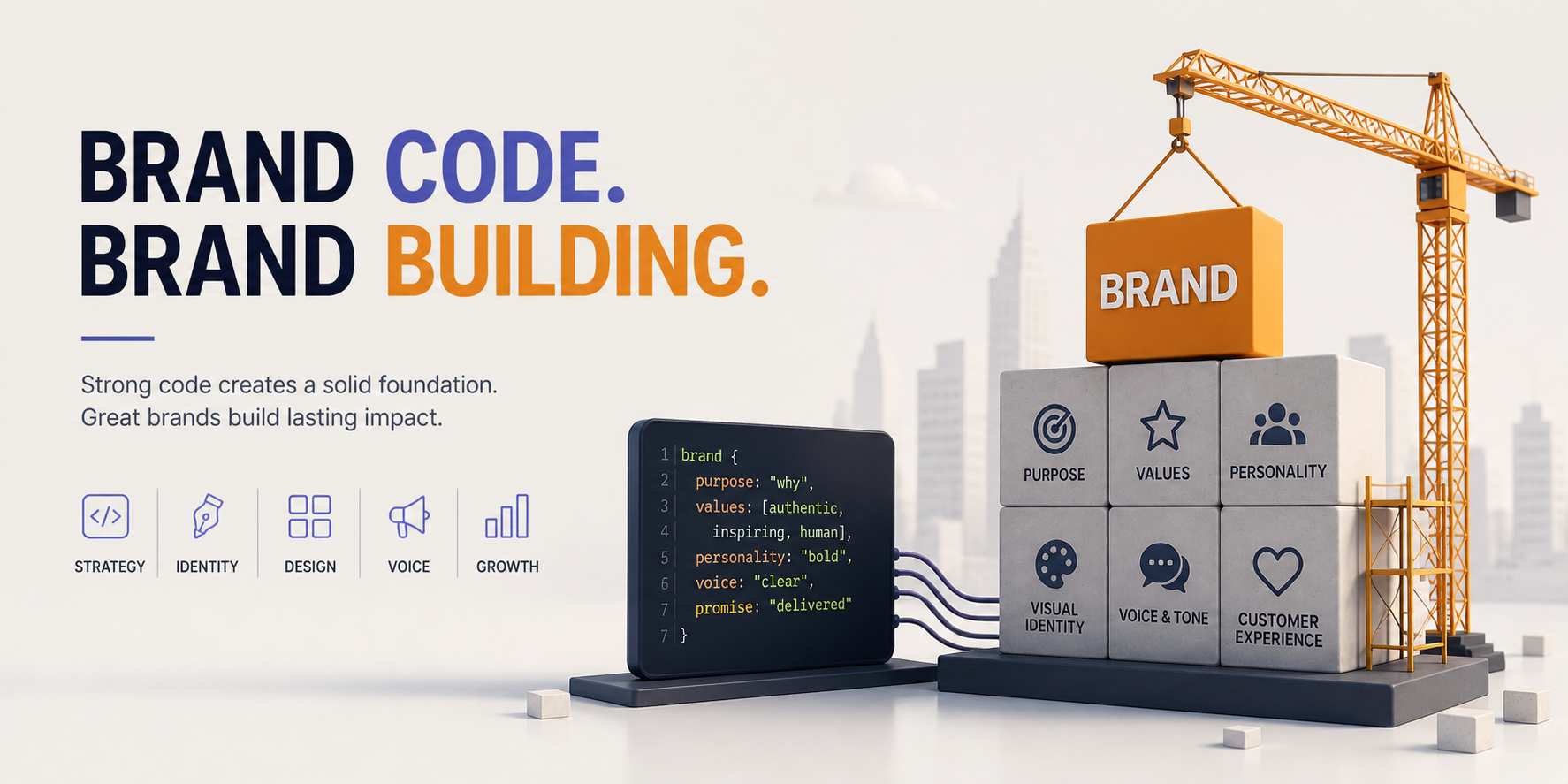
In today’s highly competitive business environment, building a brand is no longer just about designing a logo, choosing a color palette, or creating a catchy tagline. Those elements are important, but they are only the visible expression of something much deeper. Behind every successful brand is a strategic foundation that defines what the brand stands for, how it behaves, what it promises, and why consumers should believe in it. This foundation is what we call Brand Code. Brand Code is the DNA of a brand. It is the strategic framework that brings together consumer understanding, business ambition, market opportunity, and creative expression into one unified system. When built correctly, it becomes the guiding force behind every brand decision—from product development and communication to customer experience and long-term growth.
The process of building a brand code always begins with understanding customer. Before any strategy is developed or any creative work begins, the most important question a brand must answer is not “What do we want to say?” but rather “Who are we speaking to, and what truly matters to them?” This is where consumer insight becomes the foundation of brand building. Successful brands spend time observing consumer behavior, studying cultural shifts, understanding category trends, and identifying the emotional tensions that influence decision-making. On the surface, data may tell us what consumers are buying, how often they purchase, or which channels they prefer. But data alone does not build brands. The real value lies in uncovering why people behave the way they do. Great brand building happens when businesses move beyond information and begin to understand human motivation. When a brand discovers the deeper emotional drivers behind consumer choices—whether it is the desire for status, belonging, confidence, convenience, self-expression, or trust—it begins to identify opportunities that competitors may overlook.
Once consumer understanding is established, the next stage in building brand code is analyzing the market environment. No brand exists in isolation. Every business operates within a competitive landscape shaped by consumer expectations, emerging trends, economic conditions, technological shifts, and competitor activity. During this phase, brands examine their category from multiple angles. They study where the market is growing, where consumer behaviors are changing, which segments are underserved, and what spaces competitors currently dominate. At the same time, businesses take an honest look inward, evaluating their own strengths, weaknesses, product capabilities, reputation, and existing perception in the market. This stage is critical because brand code is not built around assumptions—it is built around strategic reality. The strongest brands are often created by identifying the gap between what consumers need and what the market currently offers.
As opportunities begin to emerge, the brand starts defining its strategic identity. This is one of the most important stages in brand code development because it answers the fundamental question: “Who are we as a brand?” At this stage, businesses define their purpose, their ambition, and the role they want to play in the lives of their customers. Brand purpose goes beyond making sales or gaining market share. It defines why the brand exists and what meaningful value it brings to people. Alongside purpose comes brand vision—the future the brand wants to create—and brand values, which define the principles that shape its behavior. These elements work together to create the emotional and strategic backbone of the brand. Without this clarity, brands often become reactive, changing direction based on trends, competitors, or short-term sales pressure. A strong brand code creates consistency because it gives the business a clear identity that remains stable even as markets evolve.
With the strategic foundation established, the next step is developing the brand’s positioning. Positioning defines how a brand wants to be perceived in the marketplace and what makes it distinct from every other option available to consumers. This is where a brand identifies its unique value proposition. It defines the space it wants to own in the minds of its audience. Some brands position themselves around innovation, others around heritage, performance, luxury, simplicity, or emotional connection. The goal is not to appeal to everyone. The goal is to become deeply relevant to the right audience. Strong positioning gives consumers a clear reason to choose one brand over another. It creates memorability, differentiation, and long-term preference.
Once the positioning is defined, the brand code begins to take visible form. This is where strategy is translated into expression. The brand’s personality begins to emerge through language, tone of voice, visual identity, storytelling, design systems, packaging, digital presence, retail experience, and communication style. Every touchpoint must reflect the same strategic identity. If a brand positions itself as premium, its design, messaging, customer service, and product experience must all reinforce that perception. If it positions itself around innovation, consumers should feel that innovation in every interaction. This is where many brands fail—not because their strategy is weak, but because their execution becomes inconsistent. Brand code exists to prevent that inconsistency by creating a unified system that aligns every expression of the brand.
As the brand enters the market, brand code continues to evolve. It is not a one-time exercise or a document that sits unused after launch. Markets change, consumer behaviors shift, and cultural conversations evolve. A strong brand code is built to be adaptable while staying true to its core identity. The best brands continuously listen, learn, and refine their strategy without losing sight of who they are. They monitor how consumers respond, how competitors move, and how market opportunities develop. They evolve their communication, product innovation, and customer experiences while keeping their brand foundations intact.
Ultimately, brand code is what transforms a business into a brand. Products can generate sales, campaigns can generate attention, and promotions can generate short-term results. But only a well-built brand code can create long-term trust, emotional connection, and lasting equity. It creates the consistency that consumers recognize, the relevance they connect with, and the differentiation that drives preference. In a world where markets move fast and competition grows stronger every day, businesses that invest in building a clear brand code do not simply compete for attention—they build something people remember, believe in, and choose again and again.